How to Keep Track of Passwords and Usernames
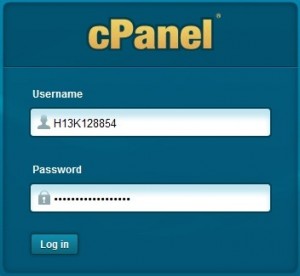
Control Panel Sample Logon Screen
With my rapidly growing list of over 165 passwords and usernames and an increase in mass password breaches, I decided today is the day to seek out a better and a safer way to create and to keep track of my passwords, usernames and other confidential information. As it turns out, this is easier said than done! There are lots of different ways to do this and each way has advantages and disadvantages.
Below are some basic password guidelines. I admit I am guilty of one or two on the “Do not” list. Gulp!
PASSWORD GUIDELINES
DO
- Do use strong passwords with combinations of numbers, uppercase and lower case letters and special characters including punctuation
- Do make passwords 8 to 20 characters long
- Do change your passwords regularly – at least every 6 months
DO NOT
- Do not use obvious passwords such as names and numbers pertaining to yourself and your family members’ birthdates and names (Avoid Password1, which is one of the most commonly used passwords)
- Do not use your username in your password in any form (backwards, doubled etc)
- Do not store passwords in unencrypted documents on computers or cell phones as these become easily accessible if your computer or phone is hacked
- Do not store written passwords on papers close to your computer where others can access the information
- Do not use the same logons and passwords for multiple accounts
- Do not have your browser remember passwords for you
- Do not copy and paste passwords from your computer
- Do not provide your password to any person or any site
PASSWORD MANAGEMENT SOFTWARE
Many people use the following passport management programs to generate and keep track of passwords and other confidential information: 1Password, LastPass, KeePass, KeePassX, and RoboForm. Most users are very positive about these programs and say they don’t know how they managed without them.
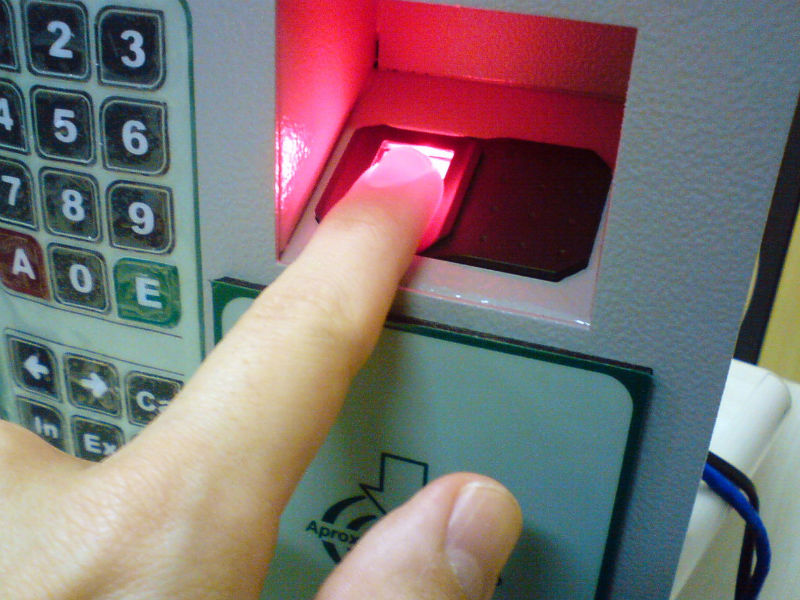
USING BIOMETRICS FOR PASSWORDS
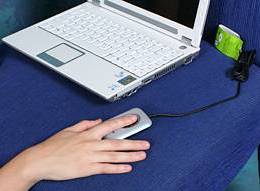
Biometric Fingerprint Reader
Biometric software uses fingerprint, hand and facial recognition and can even include DNA matching, signature verification and voice recognition.
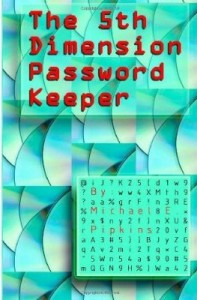
Encoded Password Tracker
PASSWORD CODING
A book called, “The 5th Dimension Password Keeper” keeps complex passwords hidden in plain sight by encoding them into a crossword-like matrix of random characters. Passwords cannot be hacked as they are not stored on the computer. Only the user knows where to begin and which direction to read. This book is perfect for those that need occasional access via passwords – it’s too manual and cumbersome for my needs.
Until next time …